Kerala Assembly 2026 · Ottappalam · Constituency 52

The brand outvoted the party.

How Major Ravi took the BJP to a record 25% vote share in Ottappalam, in a year the rest of Kerala was swinging the other way. An independent read of the numbers and the narrative behind them.

Analysis by Hemanth Lal · Based on public election data and campaign material

The frame

This is an outside read of a result, not a campaign report.

Nothing here was written from inside the Ottappalam campaign. It is built from what is on the public record: Election Commission and State Election Commission data across five cycles, verified news coverage, and the candidate's own public materials. The question this analysis sets out to answer is simple. Why did the BJP's vote share in this one seat move so sharply against the state's mood, and what does that say about the candidate rather than the party.

01 · The result
25%

The highest the BJP has ever polled in this seat.

Up from 15.6% in 2021. Past the old 2016 high of 18.4%. Raw votes climbed from 25,056 to 42,476, a jump of 69% in a single cycle.

42,476
BJP votes in 2026, a record high.
+69%
Growth in the raw vote, one cycle.
+17.4k
Net new votes added.
The trendline

Twenty years of near-flat data. One year breaks the pattern.

8.6
2006
7.3
2011
18.4
2016
15.6
2021
25.0
2026

Every prior high sat between seven and eighteen percent. 2026 clears the old record by more than six points, using the same electorate, the same seat boundaries, and a very different national mood. That combination is the starting puzzle.

Against the grain

A wave swept Kerala toward the UDF. This one seat moved the other way.

The decade-old LDF government fell. Palakkad district lost Left seats to that wave. Yet Ottappalam's Left MLA still held his seat, and the BJP's share here still grew. If a state mood explained this result, the BJP's share should have moved with the rest of Kerala. It did not. That is the single strongest piece of evidence that something local, specific to this candidate, was doing the work.

Two peaks compared

Only two years in twenty produced a BJP high here. They have almost nothing else in common.

2016 · 18.4%

A borrowed high.

The BJP's statewide vote share peaked that year. The candidate was an unknown who benefited from the national tailwind. By 2021, the share fell back to 15.6%.

2026 · 25.0%

A local high.

No comparable wave existed. The countervailing wind was stronger: a UDF sweep. The candidate was Major Ravi, contesting for the first time, with no prior electoral base to inherit.

Remove the national-wave explanation, because the wave ran the other way, and the remaining explanation is the candidate himself.

Intellectual honesty

One structural factor complicates the picture.

The UDF did not field its own Congress candidate. It backed P.K. Sasi, a CPI(M) defector running as an independent. That scrambled the usual two-way anti-Left contest and opened a wider lane for every challenger. Some of the 25% may reflect that opening rather than pure candidate strength.

An open lane explains why votes were available. It does not explain why they went to Major Ravi and not to another minor candidate, or simply stayed home.


02 · The candidate

A decorated soldier, a known filmmaker, a first-time candidate.
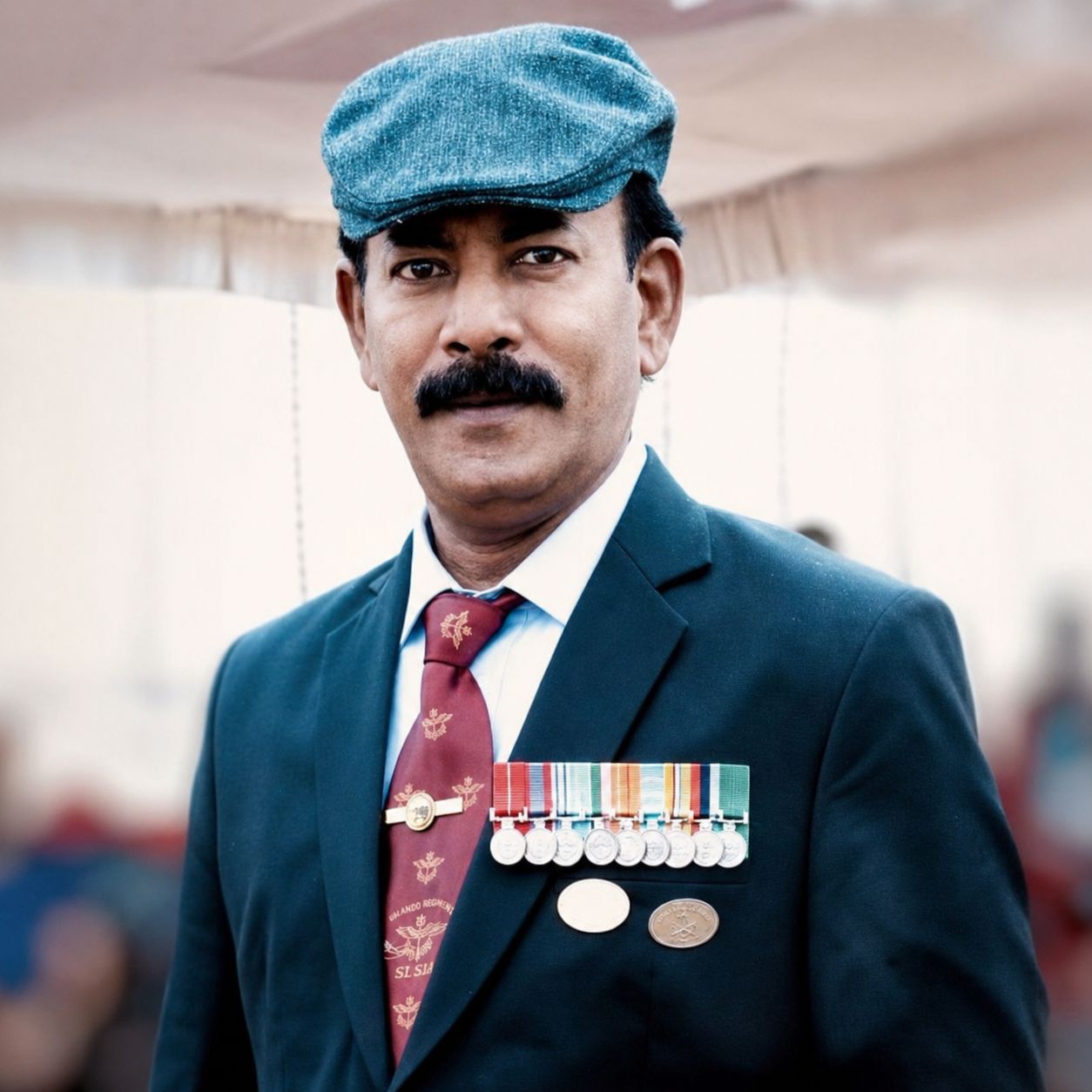
Major Ravi, gallantry medals
The public record

Major A.K. Raveendran, SM

Born Palakkad, 1958. Local by birth.
Service Retired Indian Army officer, former NSG commando.
Record Part of the operation that hunted Rajiv Gandhi's assassins. Two Presidential gallantry medals.
Cinema Director of the Major Mahadevan war films with Mohanlal.
Politics Joined the BJP in December 2023. First contest for elected office.

The previous BJP high was built by an unknown who simply kept running. This one was built by a household name who had never run at all. That reversal, fame first and local political history second, is itself unusual and worth tracking through the rest of this analysis.
Leadership-signal audit

Reading the candidate the way voters actually do.

Evolutionary Leadership Theory holds that followers size up a leader on a small set of ancient cues. Three of Major Ravi's cues were unusually strong from day one.

SignalStarting strengthWhat the public record shows
CompetenceVery highA decorated officer with a documented record of solving hard, high-stakes problems.
CourageVery highTwo gallantry medals, a signal that is expensive to fake and impossible to buy.
BelongingStrongBorn in the district, later presented visibly in local dress rather than a national uniform.
BenevolenceNot yet establishedA war record signals strength, not warmth. This had to be built during the campaign.
FairnessUncertainA blunt, nationalist public persona carried some risk in a pluralist seat.

03 · The brand mechanism

What the public evidence shows about how the missing signals were built.

Belonging, presented visually

The costume changed before the campaign made a single argument.

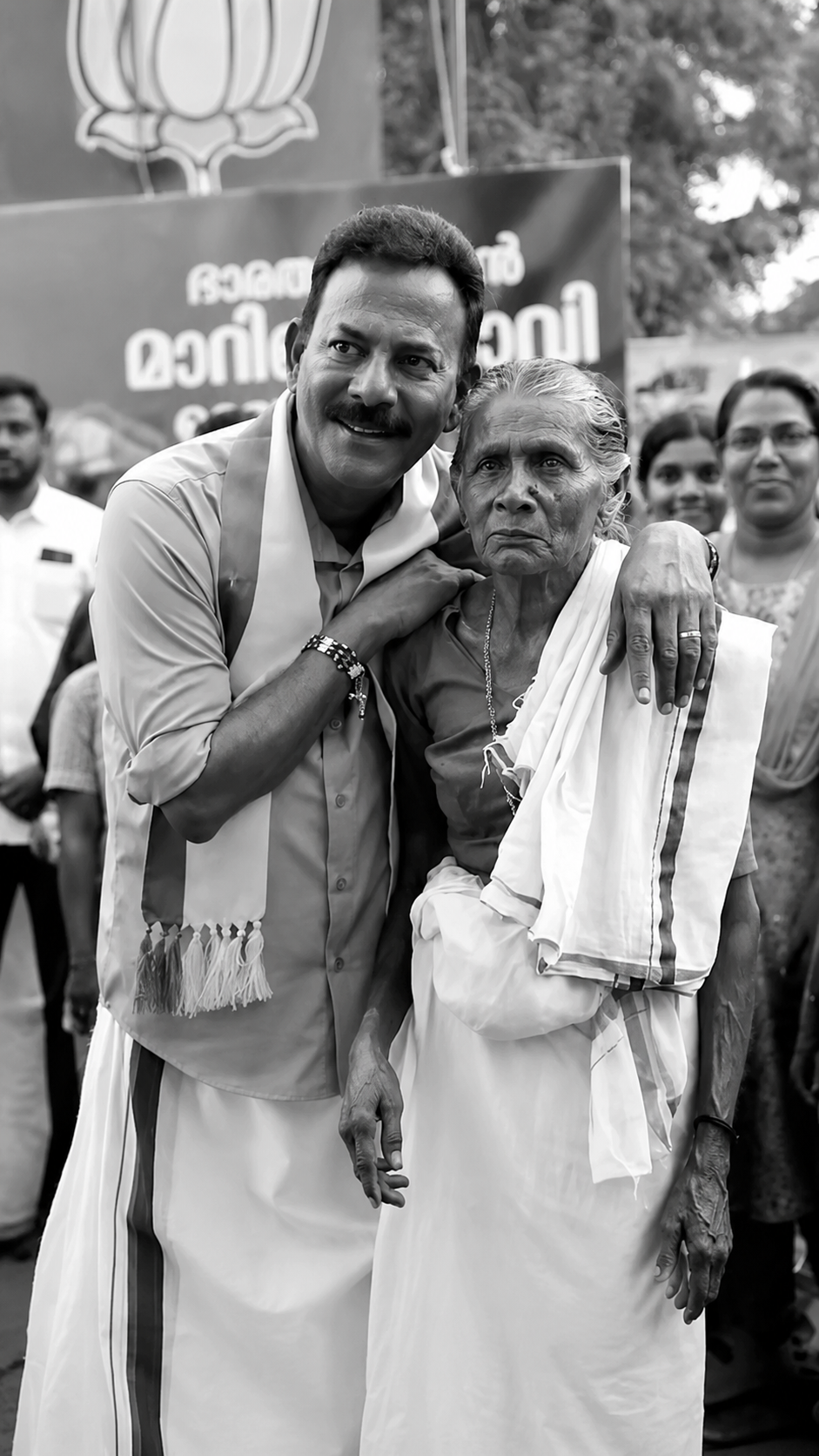
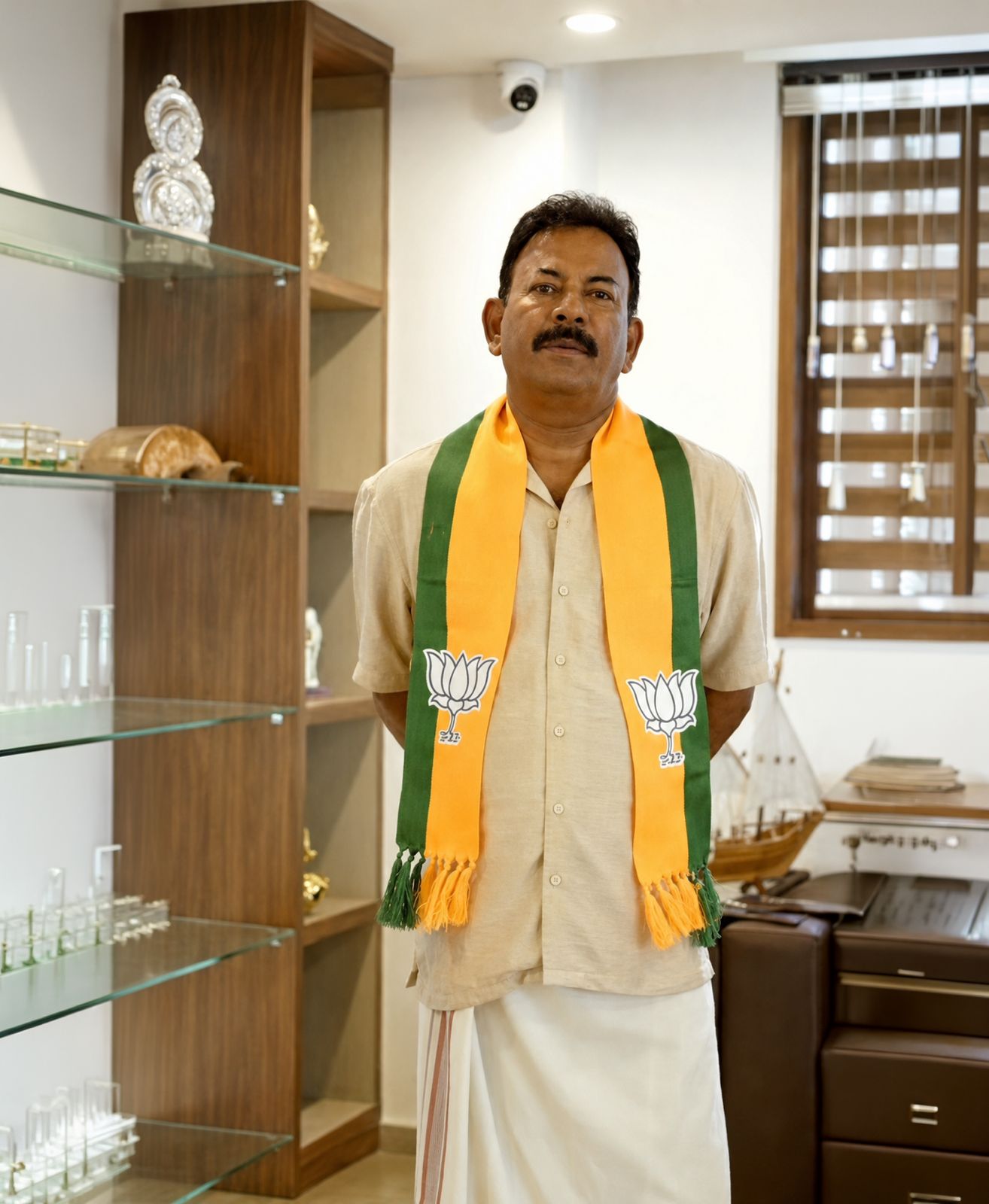
The war-film iconography is largely absent from the campaign material. In its place: the cream jubba and mundu worn by an ordinary Kerala elder. Belonging is one of the oldest cues followers read for, and it is read visually before a word is spoken.

Major Ravi in traditional Kerala attire
Major Ravi greeting an elder
Presence, sustained over months

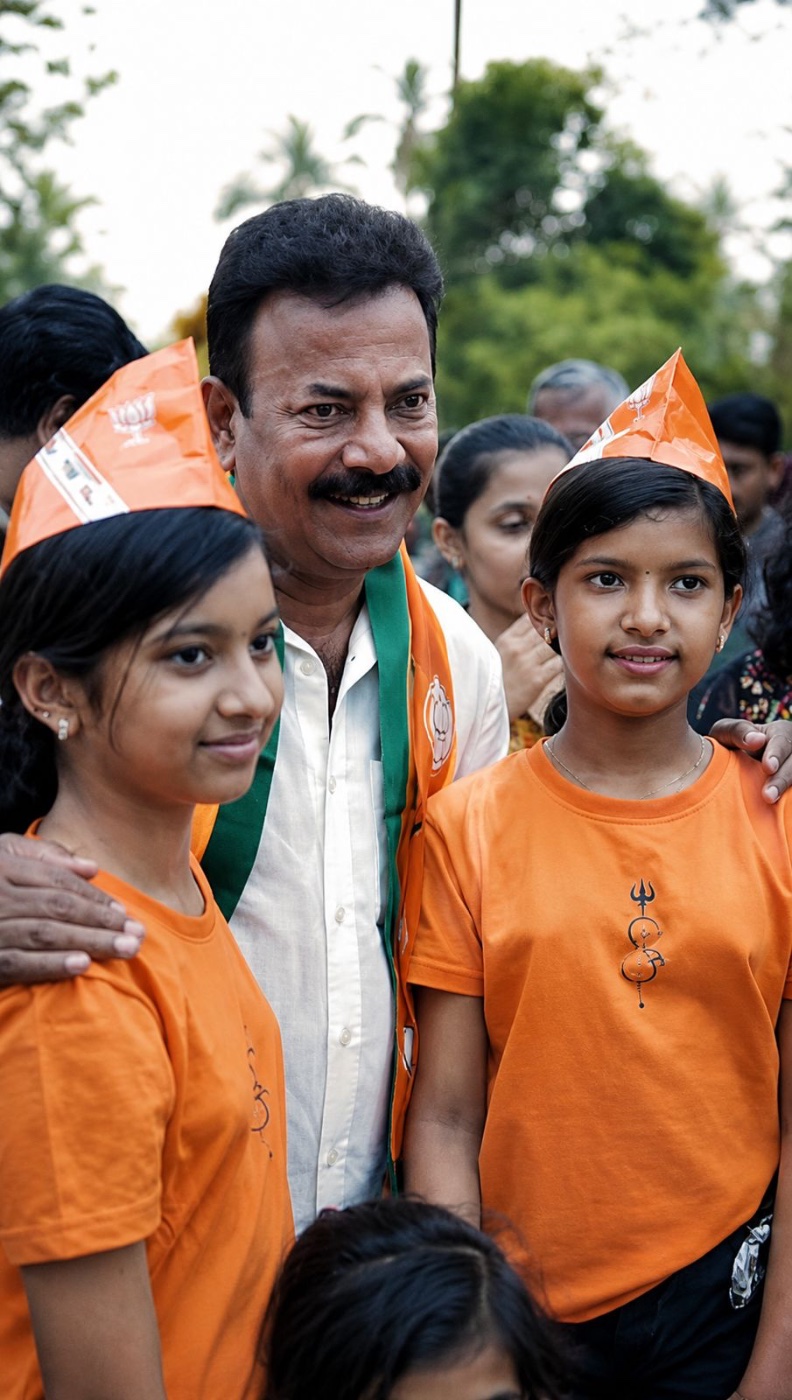
The public material shows a candidate who was physically present, repeatedly.

Followers instinctively trust a leader they can see and place, a trace of a psychology built for small, face-to-face groups. The volume of dated, street-level content is consistent with an unusually heavy schedule of direct contact.

A warmth signal, engineered

The signal audit flagged benevolence as missing. The record suggests it was built deliberately.

A public pledge to forgo the MLA salary and instead fund a poor family's wedding in every panchayat, every year. That combination of cost and repetition is what makes a benevolence signal credible rather than rhetorical.

Major Ravi, warmth signal
The name as brand
In interviews and coverage, he is rarely called the BJP candidate. He is called Major Ravi.

"Major" compresses competence, courage, and sacrifice into a single word, a trust signal that spreads faster than any manifesto and that no rival candidate can borrow. In a seat where the party label is a proven ceiling, running ahead of it looks like the more effective strategy on the evidence.

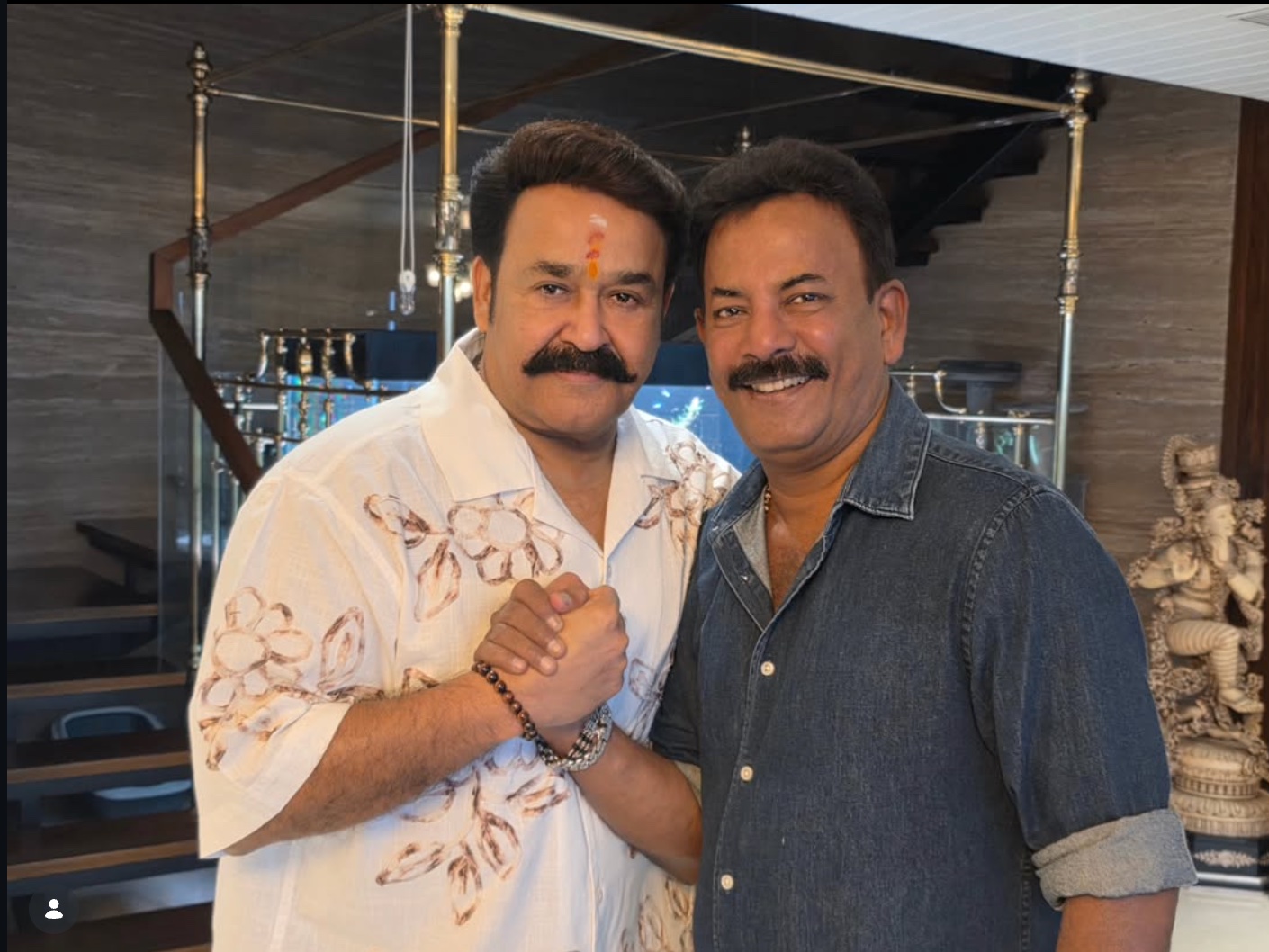
Major Ravi with Mohanlal
Celebrity capital, handled with care

A famous friendship was visible. It was not cashed in as a stump endorsement.

On record, the candidate said he does not misuse his friendships for politics. That restraint itself functions as a signal: a man who declines to exploit a relationship reads as trustworthy on the exact dimension voters instinctively check for.


04 · The ground evidence

Where the effort was actually spent.

The deciding bloc

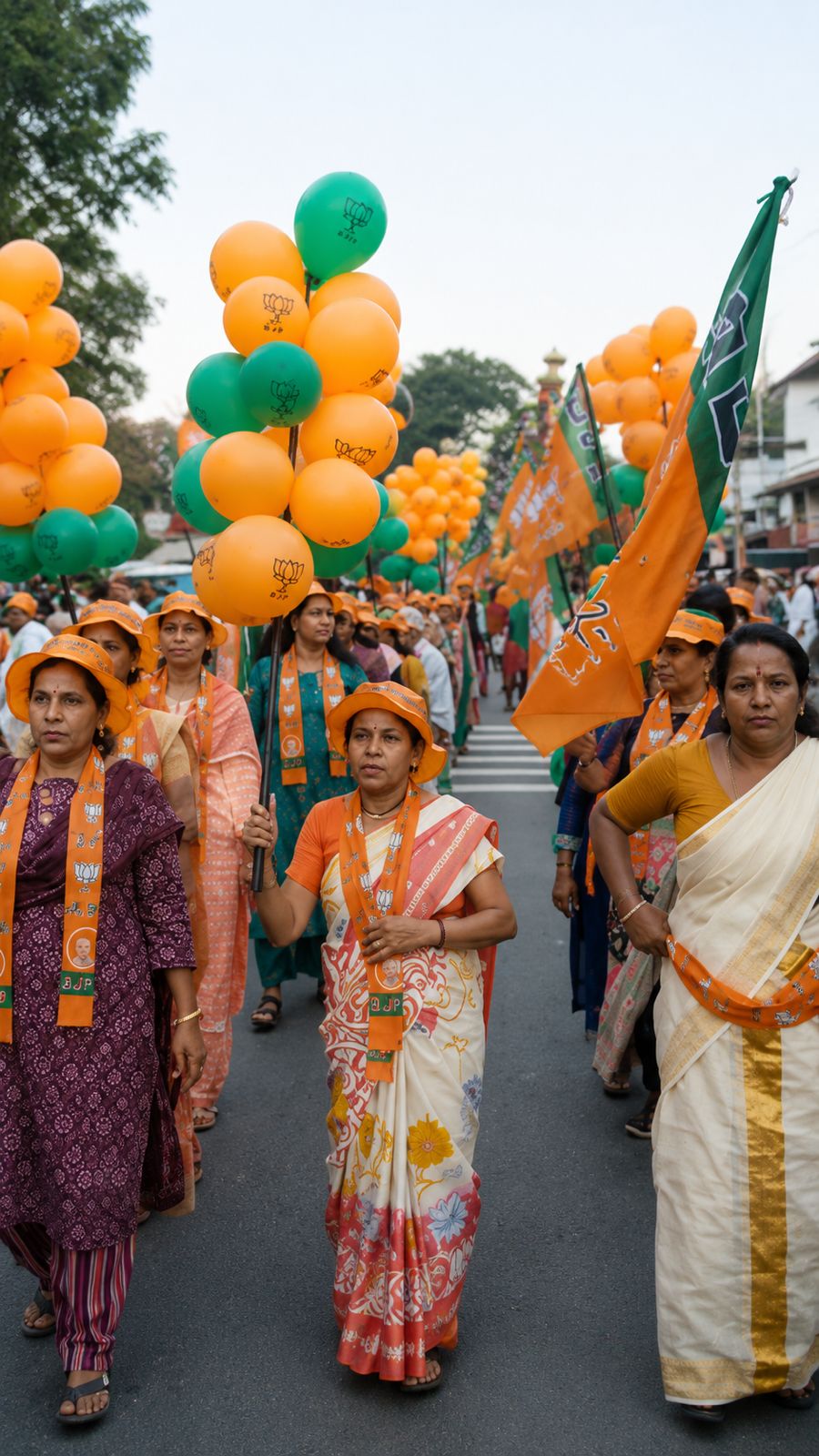
Women appear at the front of the campaign's own imagery, and the arithmetic explains why.

Ottappalam's electoral roll is female-majority. Kerala's women voters weigh welfare, safety, and trust more heavily than party loyalty. Women-led rallies and neighbourhood outreach line up with that electorate rather than a generic national playbook.

Women-led BJP rally
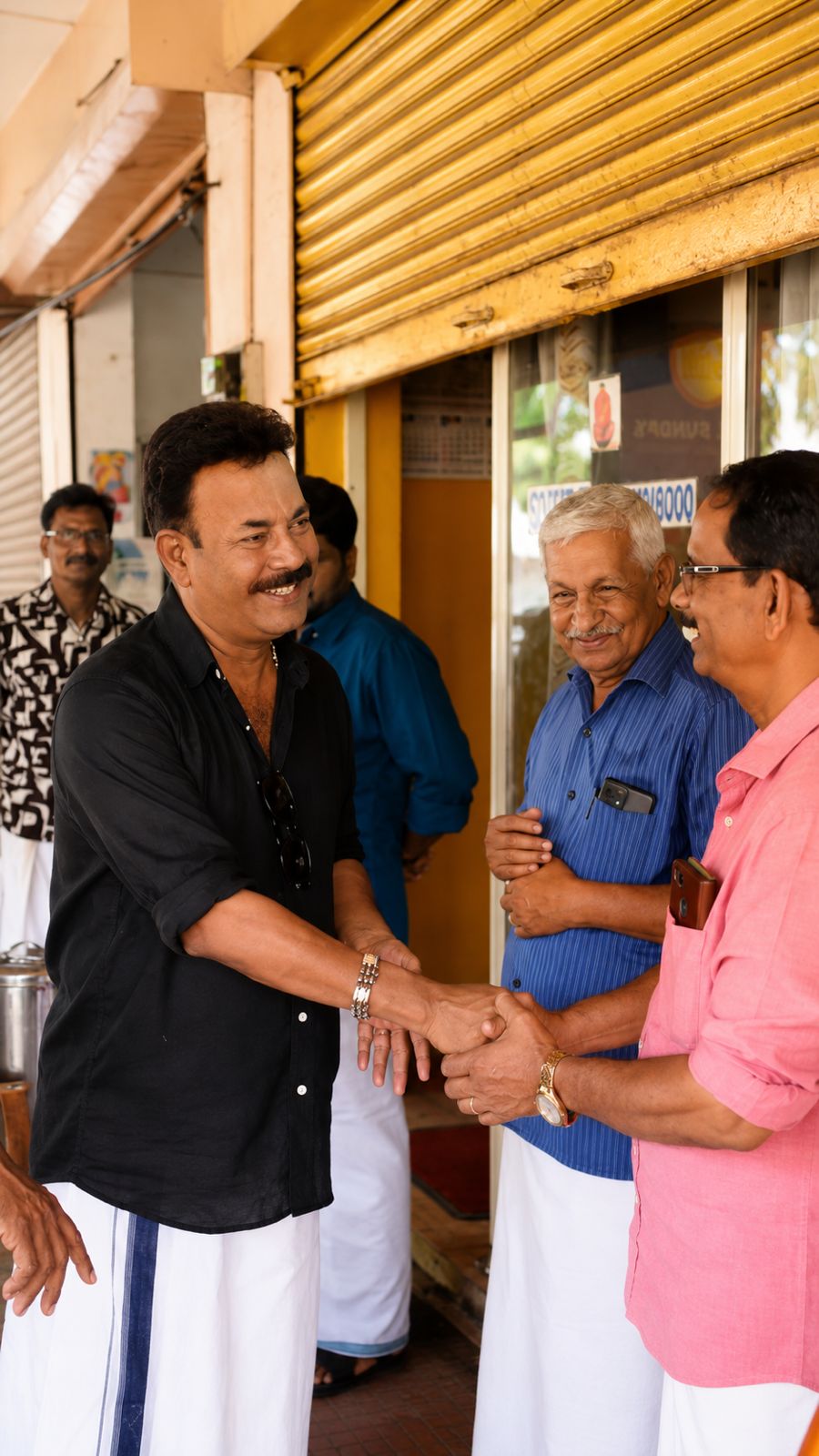
Major Ravi greeting shopkeepers
Retail politics

The visible pattern is door to door, not stage to stage.

The municipality and its seven surrounding panchayats appear repeatedly across the dated material, worked as a circuit. Retail-level campaigning is slow and unglamorous, and it is also the highest-return activity in a sceptical electorate.

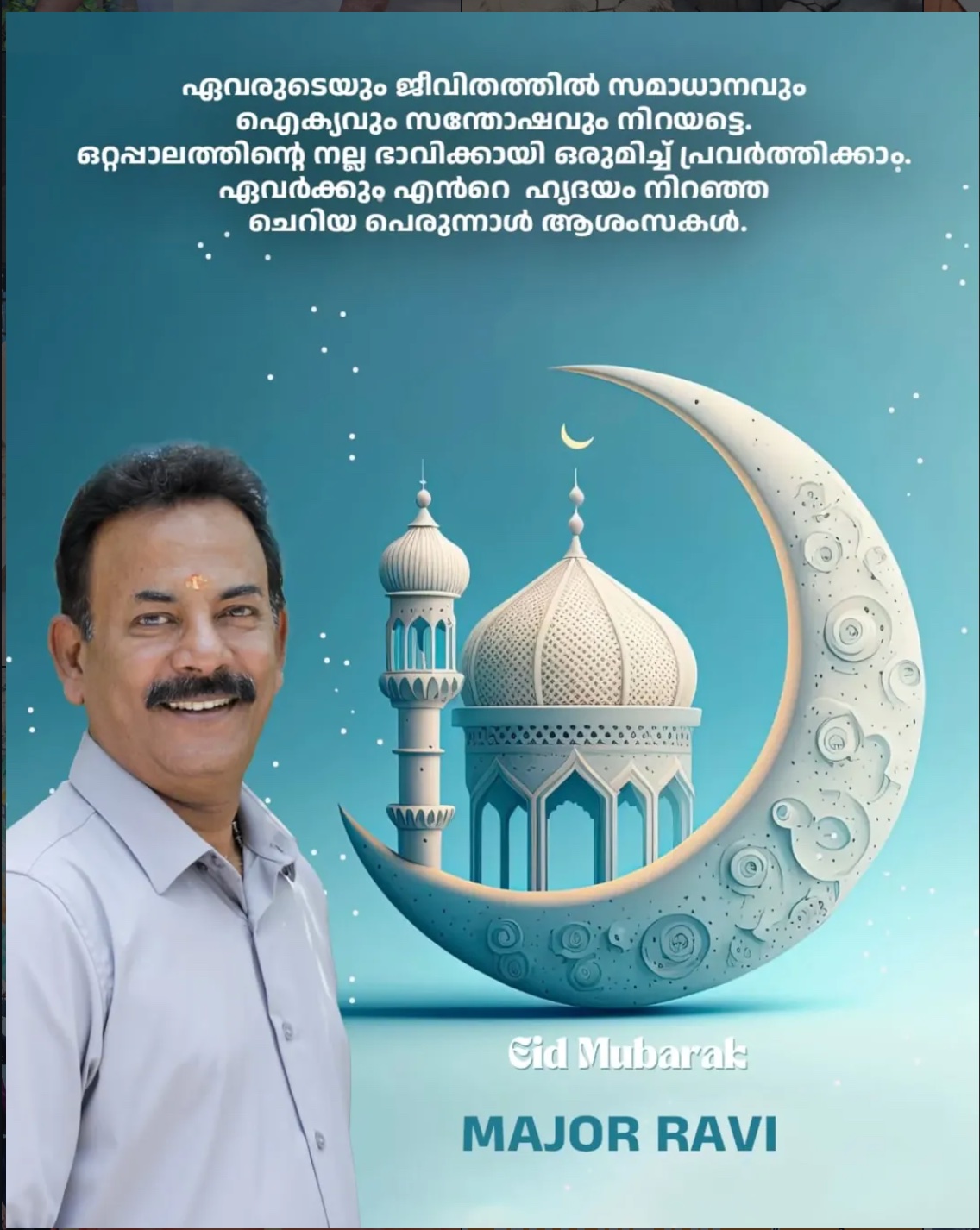
Eid greeting from Major Ravi
The fairness signal

The public messaging worked to lower a threat signal, not to raise one.

A fifth of this seat is Muslim. Explicit communal-harmony messaging and Eid greetings run directly against the candidate's national reputation for hardline rhetoric. Whatever the private calculation, the visible effect addresses precisely the gap the signal audit flagged.


05 · Narrative and amplification

Social media carried the ground campaign. It never replaced it.

The verified account, roughly 133,000 followers, is built almost entirely from footage of real appearances. Many celebrity campaigns lead with a produced feed and thin ground presence. Here the sequence looks inverted: the field generated the content, and the feed multiplied its reach afterward.

133k
Followers on the verified account.
~18.8k
Engagements on a single roadshow post.
7,761
Likes on a single nomination-eve photograph.
~708
Total posts, a sustained cadence.

These figures are drawn from visible, dated public posts rather than an audited export. The scale is unmistakable. The precise counts should be read as approximate.

The line that travelled furthest
No MLA salary. Instead, the wedding of the poorest girl in every panchayat, every year.

One sentence carried the weight of a manifesto. It is specific, costly, and repeatable, and it compresses the whole personal-brand argument into twelve words: competence to earn, character to give it away.


06 · What the data proves

Five variables plausibly explain the jump.

Candidate brand and recognition
High
Face-to-face presence
High
A fractured anti-Left field
High
Women-focused mobilisation
Medium
Earned-media reach
Medium

Note the one variable in graphite: the fractured field was a structural gift the candidate did not create. Every other driver is attributable to the candidate himself, and together they outweigh the one he did not control.

The pattern across cycles

BJP share rises with candidate strength, not with national mood.

2016 rose on a state wave and receded by 2021. 2026 rose against a wave. The winner's vote was nearly static (74,859 to 75,362). The Left base did not shrink. The challenger side reorganised around a stronger candidate. 2026 is the clearest evidence of that relationship on record here.

The conversion mechanism

The reservoir already existed. The candidate appears to be why it turned out this time.

The BJP has long polled markedly higher across the wider Palakkad parliamentary seat than in this assembly segment. That gap has historically been a turnout problem: sympathisers who do not show up for the party in a state contest. A record local vote, in a year without a national tailwind, is consistent with that reservoir finally converting.

A latent voter is not a vote until a candidate gives them a reason to leave the house.

07 · The verdict

A record vote share, delivered against the state's mood, is the signature of a personal brand outperforming a party label.

25%
Best-ever BJP share in the seat.
Against
a statewide UDF sweep, not alongside a BJP wave.
One
variable changed enough to plausibly explain it: the candidate.
Scope and limits

An honest analysis is precise about what it has and has not shown.

Established

The result diverged from the state.

Verified by Election Commission data across five cycles.

Well supported

The candidate's brand was distinctive.

Supported by consistent, dated public material read against leadership-signal theory.

Not established

The exact weight of each factor.

No internal polling or voter survey was available to this analysis.


About the strategist
Hemanth Lal
Hemanth Lal
Strategic Brand Consultant · Perception Design

Hemanth Lal advises companies and public figures on the engineering of perception, the deliberate work of turning a record into a reputation and a reputation into support.

His practice sits at the intersection of brand strategy, behavioural science, and communication: reading how audiences actually decide, then building the positioning, narrative, and campaign architecture that earns their trust. He has led brand and campaign strategy for corporations, founders, and leaders, work that runs from boardroom positioning to market strategy.

This analysis was prepared in that capacity. An outside, evidence-led read of how a personal brand can outperform the institution behind it.

hemanthlal.com

The full report

Prefer to read this offline, or share it as one file?

The complete analysis, formatted as a single document, with every chart, table, and source note in this page.

Download the PDF

Party labels set a floor. In Ottappalam, one candidate built past the ceiling on his own name.

This analysis was prepared independently, drawing on public election data, verified news coverage, and the campaign's own public materials. Its conclusion rests on the evidence: a record vote share, delivered against the state's mood, in the one cycle where the candidate himself was the variable that changed.